February 19, 2026
Pei-Yun (Lisa) Tsai
Policy Consultant

While traditional international fisheries management is backed by scientific data, quota setting can often get bogged down in the mire of national interests and scientific uncertainty. This can lead to protracted negotiations and opaque rules, making it difficult for the industry to plan operations and for managers to effectively control risk. It is precisely because of these challenges that “management procedure” (MP) – also known as harvest strategies (HS)– have emerged to meet the moment.
“Harvest Strategies (HS) are like a modern fishing vessel; at first glance, they might seem complex and daunting! But once understood and familiarized, they can bring unprecedented efficiency and sustainability. From a scientist’s perspective, the most significant advantage of HS is that it not only copes with ocean uncertainty but also strikes a balance between multiple objectives, offering clear navigational rules. Although the learning curve for HS might be steep, I believe mastering this ‘ship’ will make our fisheries more resilient, steering us toward sustainable development.” — Dr. Shui-Kai Chang (Leading Scientist on HS from Taiwan)
The momentum is undeniable. As recently as 2021, 112 of the world’s major supply chain companies sent an open joint letter to delegations at the Western and Central Pacific Fisheries Commission (WCPFC), demanding accelerated action to develop comprehensive HS for all tuna stocks. Moreover, in 2024, a Harvest Strategy 101 webinar organized by The Ocean Foundation and The Pew Charitable Trusts for supply chain partners attracted seafood stakeholders from Japan, Taiwan, Korea, China, Canada, the United Kingdom, and the United States. Last December at the annual commission meeting of Western and Central Pacific Fisheries Commission (WCPFC), I witnessed the principles of HS move from webinars to the negotiation table, seeing firsthand how HS guides real-world decision-making
Completing the “Core”: How WCPFC22 Steered South Pacific Albacore Toward Sustainability
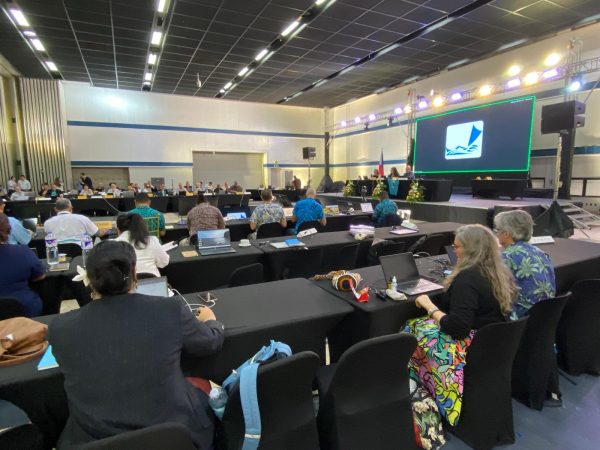
In December 2025, the 22nd commission meeting of the WCPFC convened in Manila, Philippines. From day one, voices ranging from the Chair and delegates to observer organizations unanimously signaled that the adoption of an MP for South Pacific albacore (SPA) would be the primary mission of the meeting. That is, they were committed to “completing the ‘core.”
“My top priority for this week’s meeting is the adoption of the South Pacific albacore management procedure. Agreement on SPA MP would demonstrate the Commission’s commitment to harvest strategies and the management of an economically important fishery.” — Dr. Josie M Tamate, Chair of WCPFC 22
“South Pacific albacore remains the highest priority for FFA Members at this meeting.” — Poimatagi Okesene, Chair of Forum Fisheries Committee (Forum Fisheries Agency, FFA)
During the opening session, key fishing members, including Korea and China, also showed support for the adoption of the MP for SPA.
“Korea also places strong emphasis on the harvest strategy agenda. WCPFC 22 should deliver a credible and implementable management procedure for South Pacific albacore, together with an effective implementing measure, and agree on an updated and realistic workplan for harvest strategies across key tuna stocks.” — Dr. Jong-jun Song, Acting Director General of the Ministry of Oceans and Fisheries, Korea
High Stakes, Hard Choices: The Push for Sustainability
The longline and troll fleets are the two primary groups of commercial vessels catching SPA in the South Pacific. In 2024, longliners represented 98% of the catch of SPA at 93,791 mt, . While only accounting for 2% of the overall SPA landings, troll fleets accounted for 54% of the 2024 catch in the southern area (south of X°S). By flag, China (29,732 mt) and Taiwan (known as Chinese Taipei in WCPFC; 11,016 mt) had the highest catch estimates of South Pacific albacore in 2024, representing over 50% of the total longline catch, followed by Fiji (8,436 mt), Kiribati (6,530 mt), and French Polynesia (5,066 mt) .
SPA is a lifeline not only for the economies of many Pacific Island countries but also for the fleets of key fishing nations. Take Taiwan as an example. As the member with the second-largest catch in the region, the livelihoods supported by hundreds of its vessels are heavily dependent on this fishery.
Given the high economic stakes, it came as no surprise that the path to a consensus was fraught with tension. Two key proposals regarding the MP and the Implementation Measure dominated the five-day discussion. The debate over the MP proposal focused primarily on selecting the ideal Harvest Control Rule (HCR), while the Implementation Measure faced heated discussion on the allocation of catch splits between exclusive economic zones (EEZs) and the high seas, which remained a primary concern for members including Korea, Japan, Taiwan, and many others.
To facilitate the discussion and help members build consensus over this critical issue, the work extended far beyond standard hours. After long, formal plenary sessions, participants stayed behind to share concerns and debate possible paths forward, often skipping dinner or eating late into the night. When bottlenecks emerged during these extra evening sessions, the negotiations spilled over into the margins, with delegates holding intense one-on-one discussions during lunch hours or coffee breaks.
Underpinning these grueling hours was the harsh reality facing the industry. Beyond the conference rooms, I witnessed the genuine struggles of the stakeholders involved. The Taiwanese industry, for instance, affirmed their support for sustainable fisheries management but highlighted a difficult truth – even the HCR offering the highest yield (catch) would still fall below their current catch levels due to an agreement to increase the population size to a higher target size to facilitate a more cost-efficient fishery. This reduction poses an immediate challenge to the livelihoods of the fishermen, and with future allocation decisions looming, many vessels fear they will be forced to terminate operations entirely.
Yet, recognizing that a stalemate would serve no one, the Commission pushed forward. Despite the limited time and the sheer volume of work at WCPFC 22, members prioritized the SPA MP. While there was considerable “push and pull,” with some members striving for an HCR that maximized catch, the group finally concluded at the selection of HCR 7 on the last day of the meeting. In a statement made on the final day, the representative of Taiwan acknowledged the painful trade-offs, noting that while tens of thousands of their fishermen depend on this fishery and would face further operation challenges regarding the 2026 allocation split, they would support the consensus. In the spirit of cooperation, they accepted HCR 7 to ensure the long-term viability of the stock.
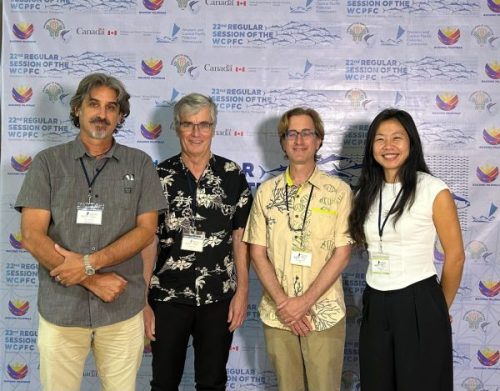
Getting the SPA MP to where it is today was no easy task, as the entire process spanned several years, from the establishment of the MP workplan, multiple workshops, and intersessional groups, to bilateral discussions, and finally adoption at the Commission meeting in 2025. For me, attending my first WCPFC meeting as an observer from Taiwan was an eye-opening experience. I saw firsthand the heavy lifting required to bridge the gap between conservation goals and the economic realities of key stakeholders. The Representative of Samoa summarized this delicate balance perfectly, “The proposed South Pacific albacore Management Procedure and Implementing Measure offers a robust, science-based, and precautionary framework built through extensive consultation, modelling, and compromise, designed to maintain the stock at sustainable levels consistent with the agreed interim target reference point (iTRP) while safeguarding social and economic objectives across the region.”
Sitting in that room, I realized that the core concept of HS is not just about dry policy, but rather, it is really about ensuring stock stability to provide for long-term, sustainable, and stable fisheries for fleets from my country and coastal communities alike.
—
Pei-Yun (Lisa) Tsai is a policy specialist with nearly a decade of experience shaping sustainable fisheries advocacy across East Asia. After six years as a Project Lead and campaigner at Greenpeace, where she coordinated multi-stakeholder coalitions and translated technical research into actionable campaigns on issues ranging from fisheries to chemical management, Pei-Yun transitioned to independent consulting. She now focuses on driving policy reform and corporate practice change within the distant water fishery sector, utilizing a holistic perspective to navigate complex political landscapes and foster collaboration between governments, industry associations, and NGOs.

Watch the latest video from @spc_cps “Developing Harvest Strategies for Pacific Tuna Fisheries” series. It breaks down performance indicators through creative examples, making the topic accessible and memorable.
#tuna #sustainability #MPs #fisheries
We attended a @iattc_ciat working group on mahi mahi in the Eastern Pacific Ocean last week! We discussed updating the stock assessment and an accompanying management strategy evaluation, and we're excited to see where this collaboration leads!
#MSE #StockAssessment #Fisheries
February 19, 2026