January 29, 2026
Rebecca Scott
Program Officer, The Ocean Foundation 

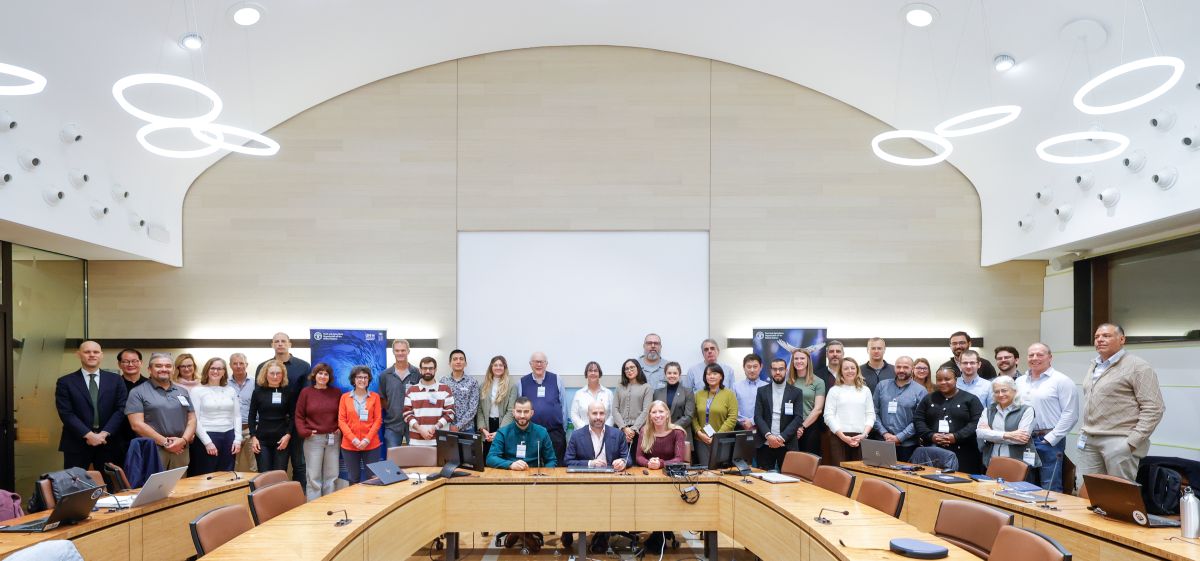
Last week, scientists, fisheries managers, industry representatives, and policy experts from around the world met at the headquarters of the Food and Agriculture Organization (FAO) in Rome, Italy for the Global Tuna RFMO Management Strategy Evaluation (MSE) Workshop hosted by the International Commission for the Conservation of Atlantic Tunas (ICCAT) and FAO’s Common Oceans Program Tuna Project. Over three days of expert presentations and group discussions, the workshop took an in-depth look at the current state of MSE efforts across tuna RFMOs (tRFMOs), including common challenges to implementing MSE-tested management procedures (MPs), also known as harvest strategies, and how to make the MSE process more technically and procedurally effective. By the end of the meeting, participants had drafted and agreed upon a consolidated set of recommendations intended to improve the design of MSE technical frameworks, strengthen communication and trust with managers and stakeholders, and streamline timelines to implementation.
Taking stock: lessons from across tuna RFMOs
The workshop opened with a keynote presentation from the perspective of fisheries managers, highlighting common frustrations among managers with the MSE process and calling for improved communication on the part of scientists, including regarding uncertainties around results and the usage of key terminology. For example, the inconsistent use of multiple terms with the same meaning was a source of frustration to managers, such as harvest strategy versus management procedure, and performance metric versus performance indicator (PI). MP and PI were agreed as the preferred terms.
Representatives from all five t-RFMOS (Commission for the Conservation of Southern Bluefin Tuna (CCSBT), Inter-American Tropical Tuna Commission (IATTC), ICCAT, Indian Ocean Tuna Commission (IOTC), Western and Central Pacific Fisheries Commission (WCFPC)) provided regional overviews of the history, successes, and challenges of MSE efforts in their respective regions. While institutional contexts differ, similar challenges emerged across presentations, including limitations in data quality and availability—particularly the reliance on catch-per-unit-effort (CPUE) data as key indices of abundance—along with the need for more ongoing and effective dialogue among scientists, managers, and stakeholders, greater investment in capacity building, and the inherently time- and resource-intensive nature of the MSE process.
At the same time, these sessions made clear how far MSE has come – all tRFMOs now have practical, hands-on experience with MSE and MSE-tested MPs. CCSBT has had an MP in place for its single stock, Southern bluefin tuna, since 2011. ICCAT, IOTC, and WCPFC have all adopted multiple MPs to-date, with several more in development at each. IATTC, while not yet having adopted an MSE-tested MP, established an ad hoc MSE working group in 2024 and is actively developing its first MP for bigeye tuna. It was also noted across regions that MSEs can help tRFMOs address existing management concerns such as lack of reliable stock assessments and managing stocks under changing climate conditions.
Spotlighting experience and expertise: where we’ve been and where we need to go
Presentations and discussions on capacity building, communication, stakeholder engagement, and industry perspectives all alluded to a common theme: the efficiency and success of MSE processes is determined largely at the science–management interface. Participants emphasized the importance of engaging managers and stakeholders early and often, including to establish management objectives and risk tolerances, clearly communicate key results and their implications, and focus attention on pressing decisions that need to be made. These discussions were seen as best supported through science–management dialogue (SMD) groups, which facilitate engagement, build trust, and help retain institutional memory to combat frequent staff turnover.
Many presentations showcased the timelines to adoption for existing MPs at respective RFMOs, illuminating that delays in MSE processes are often procedural rather than technical. Shifting expectations and the absence of clear, structured timelines can result in steps being revisited multiple times. Throughout discussions, participants agreed that with stronger communication and clearly defined roles, deadlines, and decision points, full MSE processes can be streamlined considerably and should take only 2-3 years to complete.
Finally, a series of methods-focused presentations addressed a range of technical considerations when building MSE frameworks, including developing multi-fishery MPs, characterizing uncertainties, treatment of observation, and considering robustness to climate change.
Guiding the way forward: collective recommendations
On the last day of the workshop, participants distilled the previous days’ discussions into a consolidated set of recommendations for improving MSE design, implementation, and communication at tRFMOs. High-level takeaways from the group’s recommendations include:
Looking ahead
This workshop brought together leading experts in MSE at tuna RFMOs in a landmark exchange of experience and ideas. It provided a rare and valuable opportunity to reflect collectively on the evolution of MSE within tRFMOs, shared challenges encountered along the way, and practical ways to improve the quality, effectiveness, and efficiency of MSE processes.
The recommendations developed by participants are intended to be presented for consideration at all tRFMOs; their ultimate impact will depend on institutional willingness to consider and implement them. If put into practice, the benefits could be substantial: greater understanding of—and trust in—the MSE process among managers and stakeholders, more robust management procedures, and more predictable, sustainable outcomes for RFMO-managed stocks worldwide.

Watch the latest video from @spc_cps “Developing Harvest Strategies for Pacific Tuna Fisheries” series. It breaks down performance indicators through creative examples, making the topic accessible and memorable.
#tuna #sustainability #MPs #fisheries
We attended a @iattc_ciat working group on mahi mahi in the Eastern Pacific Ocean last week! We discussed updating the stock assessment and an accompanying management strategy evaluation, and we're excited to see where this collaboration leads!
#MSE #StockAssessment #Fisheries
April 2, 2026