September 12, 2024
Chloé Evans
Senior Program Associate, International Fisheries 


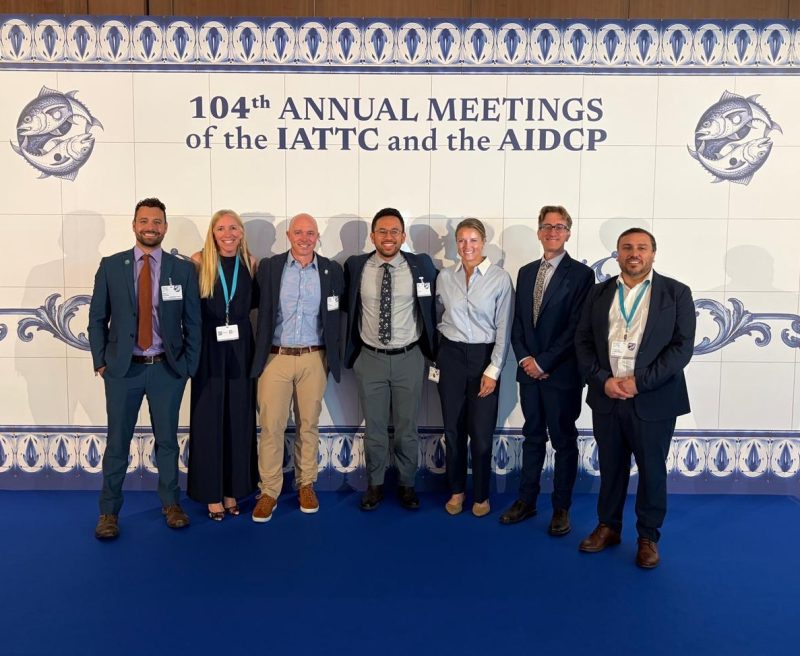
The Inter-American Tropical Tuna Commission (IATTC) Annual Meeting concluded in Panama City last week, and several important decisions and developments will shape and advance fisheries management in the Eastern Pacific Ocean (EPO) in the coming years. Below are the key harvest strategy-related proposals discussed, their outcomes, and the work ahead for these critical fisheries.
Science-Management Dialogue (SMD) Working Group
The IATTC agreed to establish a formal Science-Management Dialogue (SMD) group to advance the management strategy evaluation (MSE) process in the EPO. First proposed by the IATTC Scientific Advisory Committee (SAC) in 2018, this group will provide a structured forum for guiding harvest strategies. Until now, the Commission has relied on informal MSE workshops, including the most recent one in December 2022, which, while useful for capacity building, lacked the authority to make formal recommendations. Thanks to Ecuador’s proposal, this group will be able to make formal recommendations to the Commission, streamlining progress toward effective and efficient management.
South Pacific Albacore (SPALB) Collaboration
Ecuador’s proposal for improved collaboration between the IATTC and WCPFC for the development of a SPALB harvest strategy was adopted. This collaboration is critical to ensuring effective Pacific-wide management of the stock. IATTC representatives joined the WCPFC’s SMD working group, ensuring that SPALB catches in the EPO are properly accounted for in WCPFC’s developing harvest strategy, which is scheduled for adoption this year.
Tropical Tunas (TT) and Bigeye Tuna (BET) Management
The tropical tunas measure dominated discussions at the meeting. This year’s yellowfin tuna assessment failed, leading to a prolonged debate over how long to extend the current measures. Delegates agreed to adopt a two-year rollover with triggers to review the measure if new information becomes available. While this measure was extended by two years, an MSE-tested harvest strategy is expected for bigeye next year. It is essential to maintain momentum toward this important milestone. IATTC has committed to scheduling at least two workshops/SMD meetings before the 2025 meeting to agree on management objectives and provide feedback on the preliminary MSE results.
Sharks: A New Path Forward
A proposal for improving shark management was adopted, which includes guidance on shark research. This adoption gives IATTC the mandate to work on developing a blue shark MSE, which would align with ongoing efforts at ICCAT and IOTC and improve management for this commercially and ecologically important species.
FAO and HarvestStrategies.org
Food and Agriculture Organization of the United Nations (FAO), in partnership with HarvestStrategies.org, hosted a well-attended side event at the IATTC meeting that highlighted the ongoing work to promote the adoption of harvest strategies for sustainable fisheries management. The event provided a platform to discuss the importance of implementing effective science-based management tools, with a particular focus on how harvest strategies can help safeguard vital fish stocks in the EPO and beyond.
Looking Ahead in 2025
IATTC made significant strides during its annual commission meeting, but much work remains. With several proposals adopted, including the formalization of the SMD working group and advancing cross-commission collaboration on SPALB, the groundwork is laid for continued progress. Harvest strategy priorities for 2025 include the adoption of harvest strategies for bigeye and Pacific bluefin tuna, the first SMD meeting, and the first climate change workshop, which is expected to highlight MSE and harvest strategies as tools to build climate-smart management systems.
Building on the momentum from this meeting, there is strong potential for member countries, scientists, managers, and stakeholders to collaborate effectively and ensure that modern, sustainable fisheries management in the EPO becomes a reality.

‼️ Join us next month on November 4 (at 11:00 GMT) for the next webinar in our quarterly series! Our expert panel will be discussing how to make management procedures more efficient during both the development and implementation stages.
Register: https://us06web.zoom.us/meeting/register/X7ub2wxiR2-eFKqk8Taqvg#/registration

October 5, 2026

September 22, 2026
September 9, 2026