August 5, 2022
Shana Miller
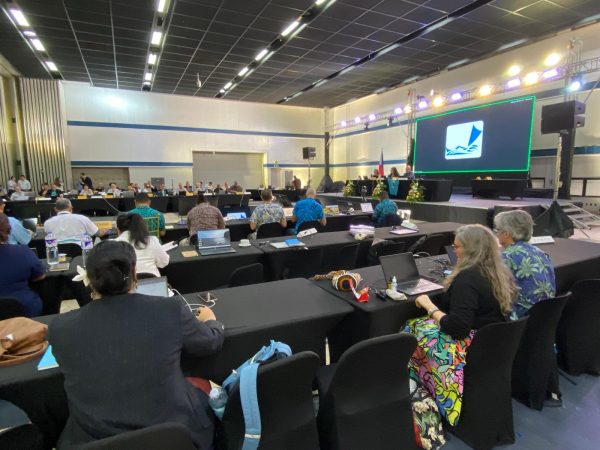
A historic opportunity to adopt the first ever harvest strategy by a regional fisheries management organization dedicated to tunas (tRFMO) in the Pacific Ocean went unfinished this week at the Inter-American Tropical Tuna Commission’s (IATTC) 100th meeting held in Phoenix, Arizona, USA. After seven years of development, including management strategy evaluation (MSE) testing and a series of stakeholder meetings, a fully specified harvest strategy was ready for adoption for north Pacific albacore. While member states succeeded in adopting a proposal co-sponsored by Canada, Japan, and the USA that contained management objectives, reference points, and a monitoring strategy, they did not cross the finish line. The omission of a harvest control rule (HCR), the operational component of the harvest strategy that sets fishing levels based on population size, means north Pacific albacore management stays essentially unchanged on the water. IATTC will need to return to this issue next year to add a mechanism and trigger for management that can achieve the measure’s vision for the future, a hallmark of the harvest strategies approach.
But, there is still hope that this harvest strategy can make its way across the finish line in the Pacific this year! North Pacific albacore is jointly managed by both the IATTC and the Western and Central Pacific Fisheries Commission (WCFPC). The baton is now in WCPFC’s hands to determine how the harvest control rule will operate in the context of the full harvest strategy. Managers will have their next shot to recommend a fully specified harvest strategy at WCPFC’s Northern Committee meeting in October, helping to tee up adoption at WCPFC’s December Commission meeting. IATTC can then follow suit next year, especially as the measure passed this week includes a directive for IATTC to adopt an HCR in 2023.
While the population of north Pacific albacore is healthy, neither overfished nor experiencing overfishing, a harvest strategy offers predictable and effective management that will ensure the fishery stays on track. If the stock takes an expected turn due to environmental or biological factors, the HCR will kick in, providing sustainability while still maximizing catch. The fishery needs action now – history has shown that waiting for population collapse to pass management is a recipe for disaster. WCPFC still can make this harvest strategy happen in 2022, starting with the Northern Committee in October.

We're co-hosting a regional fisheries workshop in Egypt this week, bringing together GFCM & ICCAT managers and scientists. The focus: harvest strategies and management strategy evaluation.
More on the workshop: https://tinyurl.com/3bu6ftx4

February 19, 2026