
Have you ever wondered what a Harvest Strategy is? The concept might seem unfamiliar to many, but imagine playing a board game with your friends and family. The game you are about to play has evolved over time, incorporating innovative changes, updates, and additional features. Before starting, you gather around the kitchen table to read the instructions carefully. The updated game offers different pathways or strategies to win, but you must agree on the rules and choose one pathway for the entire game.
Now, let’s shift our focus to the world of fish, specifically tuna. Visualize hundreds of tuna swimming in our oceans, forming a single stock. These tunas, like any other living organism, undergo a life cycle from birth, growth, breeding, and eventually death. While they have their own growth and survival strategies, they face numerous threats, such as predation, disease, competition, and old age. These threats contribute to what is known as “natural mortality”, in other words: fish dying because of natural events. However, this is not the only concern.
Considering that the global annual consumption of aquatic foods reached approximately 20.2 kg per capita in 20201, aquatic foods serve as a significant protein source ensuring food security for humanity. To meet these resource requirements, thinking about how we fish becomes imperative. Fishing, an ancient human activity that has existed for thousands of years, employs different methods and gears depending on the targeted species. In addition to natural mortality, experts must consider “fishing mortality”, as fish stocks are prone to fishing, posing the greatest threat to commercial and other related fish species caught accidentally.
It can be argued that certain fishing methods have different ecological impacts, with some being more sustainable than others. When we examine a fishery closely, we realize it is far from a trivial activity. Ecological impacts are just one aspect to consider; socioeconomic factors also play vital roles. The fishing industry employs approximately 33 million people worldwide, from processing to preparing or selling, with an estimated economic value of landings of USD 20 billion. Tuna alone accounts for approximately 7% of this total1.
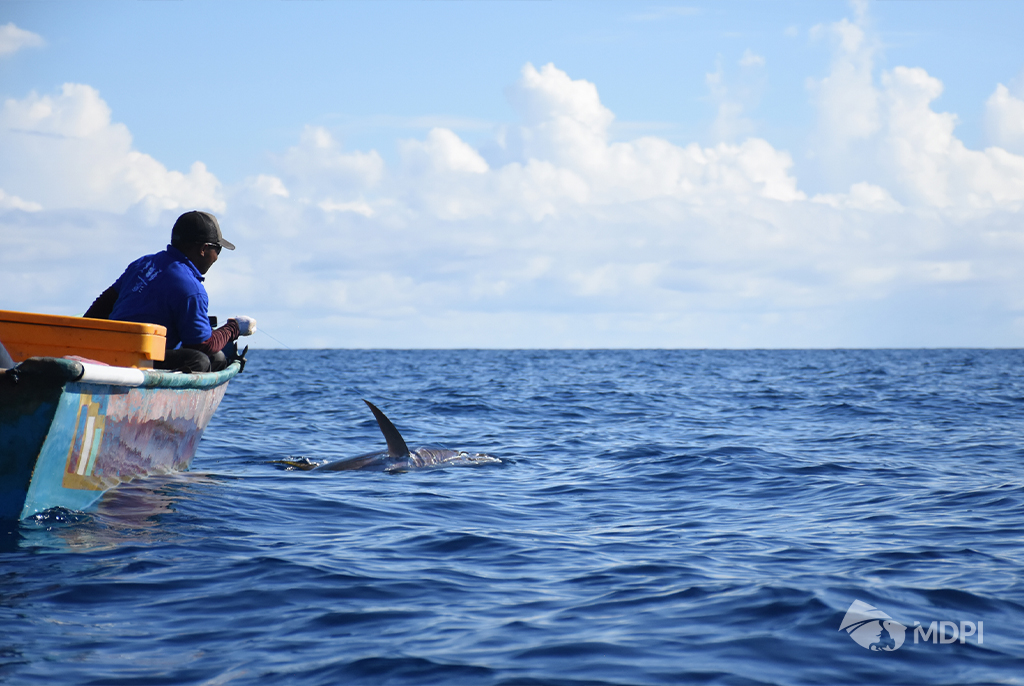
Returning to the game analogy, instead of playing with friends and family, imagine that the players are fishers and other stakeholders of a tropical tuna fishery. They all are competitive and want to win, and they each have their own goals and expectations, creating a complex dynamic. Fishers may aim to catch as much fish as possible in the shortest time, while NGOs may advocate for sustainable fishing practices and train communities, and scientists may have a more objective stance as they inform decision-makers based on data analysis. However, all players are interconnected, and the game becomes more complex when data consistently shows declining tuna trends, potentially leading to a scenario where there are no more tuna to harvest.
An example of a tuna species facing challenges is the yellowfin tuna (Thunnus albacares) in the Indian Ocean, which has been classified as overfished and subject to overfishing since 20182. Overfishing refers to depleting the stock of fish below the level that can sustain maximum yield.
To avoid this worst-case scenario and achieve harmonious and beneficial outcomes for all players, fisheries management becomes crucial. This is where a Harvest Strategy, also known as Management Procedure or Management Strategy, comes into play. Harvest Strategies are used by countries worldwide, including Indonesia, which launched its own Harvest Strategy for Tropical Tuna in Indonesian Archipelagic Waters in June 2023 with MDPI’s active support.
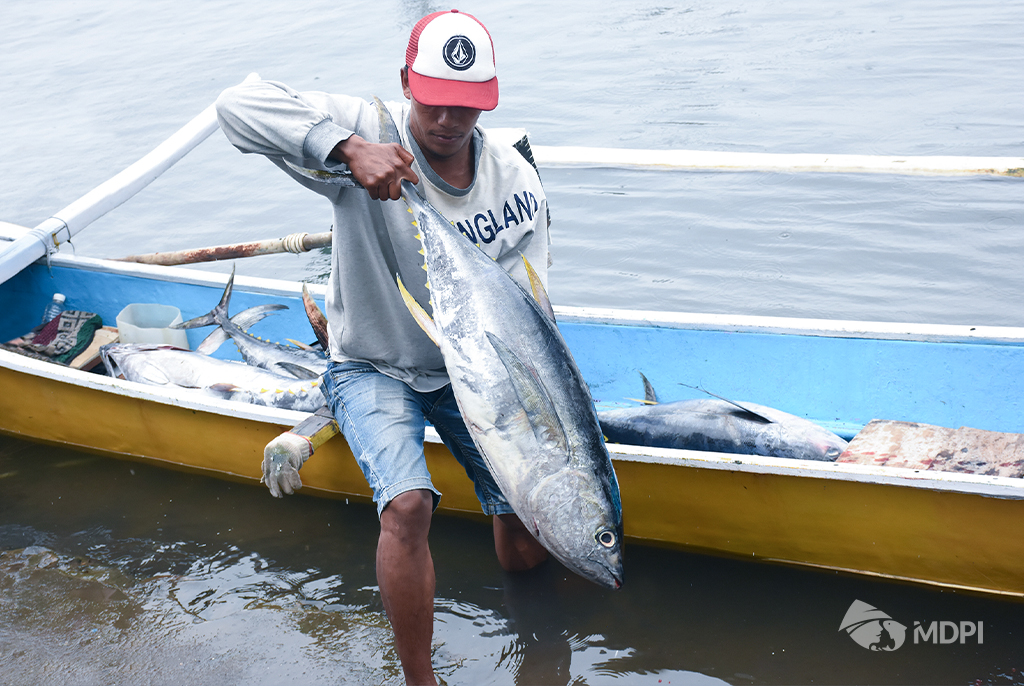
The launch of the Harvest Strategy for Tropical Tuna in Indonesia marks a significant milestone in the nation’s commitment to sustainable fisheries management. The involvement of diverse stakeholders, including MDPI, has played a crucial role in supporting data-driven decision-making and stakeholder engagement. The Harvest Strategy provides a roadmap for responsible fishing practices, balancing ecological, economic, and social objectives. Continued efforts and awareness raising are essential to effectively manage tuna resources, protect marine ecosystems, and support the future of Indonesia’s tuna fisheries and coastal communities.
A Harvest Strategy is a pre-agreed framework based on scientific advice and the best available data. By utilizing data and information about the fishery, experts can simulate different long-term scenarios, taking into account uncertainty and using computer models, to predict how stocks might behave3. This strategy is similar to choosing a pathway before starting the game. Experts can test and compare different scenarios based on fisheries science against agreed-upon management objectives, aiming to prevent stock collapse. This is known as a Management Strategy Evaluation, and is a key component of a Harvest Strategy3. If the available data for a Harvest Strategy is accurate and reliable, it could reduce the need for costly operations like stock assessments.
A Harvest Strategy follows a closed-loop process with different phases and a set of actions prior to its establishment. This includes monitoring and assessing the fishery, adjusting fishing levels based on harvest control rules4 (actions that describe how management measures should be adjusted in response to indicators of stock status), employing specific management measures, and enforcing and monitoring those rules to ensure that stakeholders are compliant. Collaboration among stakeholders is key to successful fisheries management, just like the cooperation among players in a game. Fishers, governments, NGOs, researchers, and other stakeholders must work together as a team to achieve sustainable outcomes. They can all contribute by collecting and sharing data, monitoring the fishery, sharing their expertise, and ensuring compliance with rules.
In conclusion, the Harvest Strategy is a game-changer for sustainable fisheries management. By incorporating scientific advice, data-driven decision-making, and collaboration among stakeholders, we can navigate the complexities of fisheries management and safeguard fish stocks for future generations. Just like in a board game, strategic planning and cooperation are essential for success!
About the Author: Kai Garcia Neefjes (he/him/his) is a Program Associate Specialist at Masyarakat dan Perikanan Indonesia (MDPI), a non-profit organization aspires to empower coastal communities in achieving sustainability by supporting community organization and harnessing market forces. You can contact him at kai.garcia@mdpi.or.id or visit www.mdpi.or.id to learn more about tropical tuna harvest strategy in Indonesia.
References
[1] FAO, The state of World Fisheries and Aquaculture 2022. Towards Blue Transformation. (Rome: FAO, 2022), 51-82,
www.fao.org/3/cc0461en/cc0461en.pdf
[2] Indian Ocean Tuna Commission, 17th Working Party on Tropical Tunas Report. (IOTC, 2015),
www.fao.org/3/bf342e/bf342e.pdf
[3] CSIRO, Key concepts for Harvest Strategies and Management Strategy Evaluation. (CSIRO, n.d.).
[4] “Report of the 2018 joint Tuna RFMO Management Strategy Evaluation working group meeting,” June 13-15, 2018, www.tuna-org.org/Documents/tRFMO_MSE_2018_TEXT_final.pdf
In the world of fisheries management, certain moments stand out as pivotal — opportunities to redefine our approach to ocean stewardship and secure a more sustainable and biodiverse marine environment. The upcoming Indian Ocean Tuna Commission (IOTC) meetings in Bangkok, Thailand, are poised to be one such moment, with the opportunity to set precedents for the management of swordfish and skipjack tuna fisheries, as well as lay the groundwork for locking in a sustainable future for sharks. Management procedures (MPs), also known as harvest strategies, are at the heart of each of these potential advancements.
Swordfish Management: A Pioneering Move
The IOTC’s anticipated adoption of an MP for swordfish would be a significant breakthrough, representing three “firsts.” If the Australian proposal passes, the MP will set the first-ever catch limit for swordfish in the Indian Ocean, starting in 2026. It would also be the first MP adopted for swordfish worldwide and the first MP for any non-tuna species managed by one of the five tuna Regional Fisheries Management Organizations (RFMO).
This initiative recognizes the critical importance of comprehensive MPs in managing the complexities and uncertainties of marine fisheries. Given the healthy status of the swordfish population in the Indian Ocean, it emphasizes the value of implementing an MP while fish stocks are still at target levels. As such, it is crucial for the IOTC to adopt the MP for swordfish without delay to ensure the continued vitality and sustainability of this resource.
Sustainable Management for Skipjack Tuna
IOTC has faced challenges in effectively managing skipjack tuna fisheries. Since adopting a harvest control rule (HCR) in 2016, annual catch limits have been consistently surpassed. A key roadblock has been the difficulty in agreeing on catch allocation among member states. To improve the scientific basis for management, the European Union has proposed an MP that builds upon and upgrades the current HCR to a fully specified MP, offering a comprehensive and transparent approach to managing skipjack tuna.
The proposed MP outlines the management objectives, the decision rule for calculating the total allowable catch (TAC), and the process for handling exceptional circumstances – rare and unforeseen events that the MP is not designed to manage.
IOTC should adopt an MP for skipjack tuna, requiring a 70% likelihood that the fishery’s status will align with management objectives to ensure the stock is neither overfished nor subject to overfishing, important since skipjack plays such a vital role in the marine ecosystem as both predator and prey.
Once implemented, a fully specified MP will combine meticulous scientific analysis with strategic policy enhancements to ensure the long-term viability of the skipjack tuna fishery.
Extending the Horizon to Sharks
In addition to the progress anticipated for swordfish and skipjack, Maldives and Pakistan have submitted a proposal to broaden the IOTC’s management of sharks. The proposal calls for the development of reference points for priority shark species, key elements that contribute to creating an MP in the future. It also specifically calls for a TAC for blue sharks, which can be most effectively set by an MP. This proposal also highlights apex predators’ vital role in marine ecosystems and their vulnerability to overexploitation—a move that underscores the species’ ecological significance and susceptibility to overfishing.
Widening IOTC’s scope by adopting this proposal would usher in several promising developments. It marks the continued progression of implementing specific actions designed to secure shark populations’ future health and sustainability. It sets the stage for an expanded application of MPs to sharks and other non-target species. It also creates an opportunity to craft comprehensive MPs that reflect the complex interplay among marine species and their roles within their ecosystems.
Looking Forward
As we look forward to the critical discussions at the IOTC meetings, it’s important to note the significant role played by the 8th Session of the Technical Committee on Management Procedures (TCMP), which is scheduled to meet on May 10-11, just before the main annual meeting on May 13-17. The TCMP will evaluate and recommend the final set of candidate MPs for swordfish and skipjack tuna, serving as an essential science-management dialogue forum. This moment is historically significant, marking possibly the first instance where a tuna RFMO is set to adopt two separate MPs within the same meeting—one for swordfish and another for skipjack tuna.
The push for these advancements is bolstered by support from a wide spectrum of organizations and stakeholders, highlighting a consensus around the urgency and necessity of advancing MPs. Institutions such as The Pew Charitable Trusts, the World Wide Fund for Nature (WWF), the International Seafood Sustainability Foundation (ISSF), Bumblebee Foods, Europêche, and the NGO Tuna Forum—have all signaled their backing, underlining the collective priority within the IOTC framework to progress MPs.
As stakeholders convene in Bangkok, we advocate for IOTC members to grasp this opportunity and commit to implementing comprehensive management approaches for these key species. Such action would affirm their commitment to maintaining robust and productive fisheries for the future.