2 de abril de 2026
Rebecca Scott
Program Officer, The Ocean Foundation 

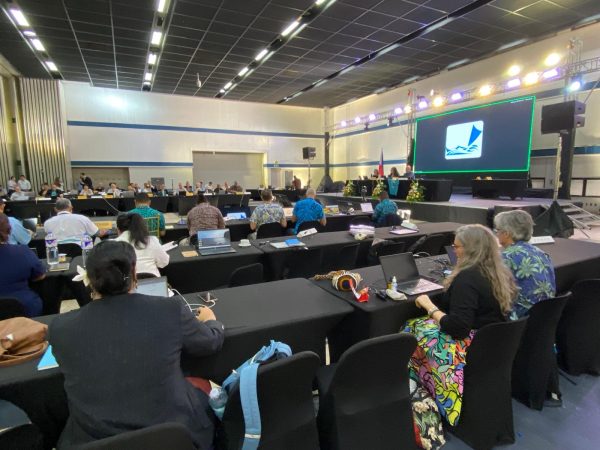
The 10th meeting of the North Pacific Fisheries Commission (NPFC) will take place in Osaka, Japan, from April 14-17, 2026, where the Commission will consider management futures for its priority stocks. This meeting is a pivotal moment for the NPFC to advance the development of management procedures (MPs), also known as harvest strategies, which are essential for ensuring long-term sustainability. The NPFC should progress development of the Pacific saury MP and should take steps to initiate management strategy evaluation (MSE) processes for other priority stocks.
Seeing it through: the Pacific saury MP
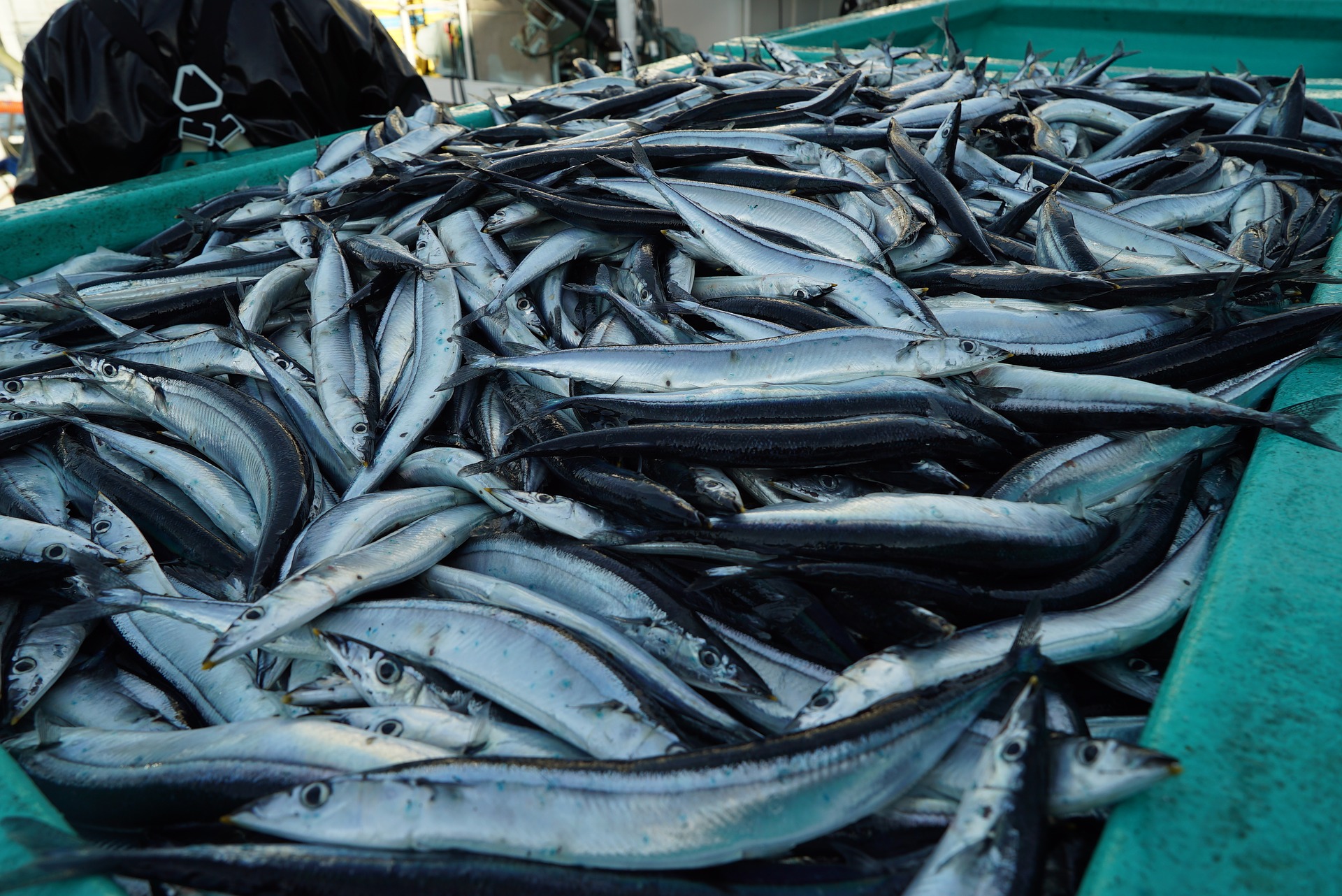
The most recent Pacific saury stock assessment showed a slight increasing trend in stock size over the last five years, although the stock is still considered to be in poor condition. The stock is currently managed by an interim harvest control rule (HCR), which was adopted in 2024 and intended only to be a short-term management strategy. The Pacific saury measure calls for the development of an MSE-tested MP by the 2027 Commission meeting, but proposals this year from Japan and Korea suggest pushing this date back to 2028 due to concerns over stock assessment reliability. The proposals also propose reducing catch limits on Pacific saury due to low stock size.
The timeline for adopting the MP should not be delayed until 2028 – the Small Working Group on Management Strategy Evaluation for Pacific saury (SWG MSE PS) (the science-management dialogue (SMD) group created for the saury MSE process) has had three years to complete the technical framework, and disagreement amongst member governments on the acceptability of the stock assessment should not stall the MSE process. Rather, MSE allows for exploration of the effectiveness of multiple different management approaches, all of which are tested for robustness under key uncertainties. For example, if a single assessment model cannot be agreed upon for inclusion as the stock status indicator in the MP, MSE can test data-based or empirical MPs, where the estimation method relies on a simpler stock status indicator (e.g., catch per unit effort/CPUE index, abundance survey). The MSE process can therefore address members’ concerns about the assessment, making it that much more important to develop the full MP on schedule.
A proposal submitted by Taiwan suggests revising the Pacific saury interim HCR to extend stock rebuilding targets, noting concerns that the most recent stock assessment may be overly pessimistic as their fleets have seen recent increases in the CPUE of Pacific saury. This argument should be used with caution, as an increased CPUE index in a specific region does not necessarily imply increased health of the overall stock – it could reflect “hyperstability” in the index, a situation where the CPUE stays level or increases despite an overall decline in the stock. Hyperstability in CPUE indices can occur due to changes in the species distribution (i.e., aggregating to smaller, dense patches of favorable habitat) or increasing fishing efficiency, and misinterpretation of hyperstability has led to disastrous consequences in other fisheries (e.g., the collapse of the northern cod fishery). Additionally, re-opening and revising the interim HCR would divert SWG MSE PS technical capacity away from completing the full MSE, which is the tasking of the SWG. The Commission should recommend that the SWG MSE PS continue to focus on developing the MP for adoption on schedule next year rather than revise the interim HCR; any proposed revisions to the HCR should be evaluated as part of the full MSE.
Opportunities for other species: chub mackerel, sablefish, and squid
While not explicitly on the agenda for discussion, there are opportunities at NPFC to pursue MPs for other priority stocks. For chub mackerel, MP efforts are currently stalled due to resistance to begin a new MSE process before the MP for Pacific saury is completed. However, with an assessment completed and accepted last year, now is the perfect time to begin building an MSE for chub mackerel. The Commission should add language to the chub mackerel measure, which is slated to be revised in Osaka, tasking the NPFC Scientific Committee (SC) to begin MP development and consider funding an external expert to alleviate internal capacity burdens.The Commission agreed to similar language at last year’s Commission meeting, but it was ultimately omitted due to clerical errors; it must be re-added this year. As for sablefish, some exploratory MSE work is being conducted by Canada that should be considered at future intersessional meetings.
NPFC priority stocks also include two squid species – neon flying squid and Japanese flying squid. While there is no established workplan towards the development of an MP for either species, there is a recognized need for squid MPs that consider their short-lived nature and responsiveness to environmental conditions. Preliminary MSE modeling work for neon flying squid was conducted last year, and The Pew Charitable Trusts has now partnered with Blue Matter Science to develop MSE tools and MPs that are tailored to short-lived species such as squid using the openMSE platform. An introduction to the project was presented at the Small Scientific Committee for Neon Flying Squid (SSC NFS) in March 2026, and the work will be continually developed with the guidance of NPFC scientist input. This project provides free science and tool development that can be heavily shaped by the SSC NFS to meet their needs for either priority squid stock. The NPFC should therefore continue to follow and support this work, including encouraging member governments to collaborate with the project developers, to ensure the sustainable long-term management of these priority species.
Building efficient science-management dialogue
To alleviate capacity concerns and make progress on MP development for additional stocks, the Commission should consider the creation of a dedicated, overarching SMD group for MSE processes. Having one single group dedicated to reviewing and overseeing ongoing MSE efforts at NPFC would be a more effective use of NPFC time and personnel capacity than having a separate SWG for each stock (as has begun with the SWG MSE PS). There is an existing example of this framework at the Indian Ocean Tuna Commission (IOTC); the IOTC Technical Committee on Management Procedures (TCMP) includes managers and stakeholders, promotes capacity building, and makes recommendations to the Commission regarding all MSE efforts that are under development at IOTC. Terms of reference (TORs) for a similar SMD at NPFC should be developed this year for approval by the SC in December 2026 and adoption by the Commission next year.
By taking these steps to solidify commitment to current and future MP development efforts using MSE, NPFC can lay the groundwork in Osaka for long-term responsible and adaptive management across all its priority stocks.
2 de abril de 2026